Decision Fatigue in Enterprise SaaS: Why Complex Websites Slow Deals
Efficient website structure is crucial for enterprise SaaS sales. Learn how clarity and focused pages can accelerate deals and reduce friction in the...

Cris S. Cubero
When founders decide it’s time to move upmarket, they almost always want one thing: make the brand look expensive.
They want more bespoke layouts, more visual differentiation, and more interactions that feel “Enterprise-grade.”
This usually happens when a company hits the Scale stage ($5M - $50M ARR). Your product has matured, your sales motion is targeting larger accounts, and you want your digital presence to reflect that shift. You look at your current site—perhaps a WordPress build inherited from the early days—and it feels small.
But companies in this stage rarely struggle because their website isn’t creative enough. They struggle because the website they have becomes harder to operate, harder to trust, and harder to scale as the business grows.
The real enemy of your marketing velocity isn't a lack of customization but lack of operability.
In our work with scaling SaaS companies, we’ve noticed that the most successful scaling companies don’t build "custom" websites. They build standardized growth infrastructure with ownership in mind.
Most custom websites start with good intentions. You want flexibility, room to evolve. You want to avoid being boxed into something generic.
But over time, the opposite happens.
Custom components pile up and small changes require engineering help. Eventually, your marketing team becomes hesitant to touch anything for fear of breaking the code.
When you build a custom environment that requires a developer to change a headline or a hard-coded animation, you have quietly introduced key person dependency.
And once a core growth asset depends on a specific individual to function, it stops being an asset and starts being a risk.
There is a misconception among founders that "Enterprise" means "Premium," and "Premium" means "Artistic."
You might think that to close a Fortune 500 deal, your website needs to dazzle the prospect with unique navigation and hard-coded scroll effects.
But the reality is the opposite. Enterprise buyers aren’t looking to be impressed; they are looking to reduce risk. They are tired, busy, and cognitively overloaded. They crave pattern recognition.
When an Enterprise decision-maker lands on your site, they are looking for specific signals of competence:
If your "custom" design hides these elements behind a creative menu or creates a unique scrolling experience that defies standard web behavior, you introduce friction. And in the Enterprise sales cycle, friction looks like risk.
For Enterprise buyers, familiarity is not a weakness. It is a signal of safety and competence.
At the Scale stage, your website is not a creative expression; it is infrastructure. And it needs to support speed over flexibility.
If you build on custom code, you are building something beautiful but delicate, that breaks during migration and requires a curator to maintain.
If you build on a standardized chassis (like a robust HubSpot theme), you are building a manageable system.
Before you sign a contract for a custom build, you need to evaluate the project not by how it looks, but by how it works.
Ask yourself these three questions:
If the answer to any of these is "No," you don't need more customization. You need a system.
We identified this pattern years ago and built a product to fix it: Atlas, the HubSpot theme built specifically for B2B SaaS companies.
It is used by over 15,000 SaaS companies not because it is flashy, but because it gives teams control without creating dependency. It also provides the exact pattern recognition Enterprise buyers crave.
Atlas proves a simple point: you don’t need custom code to create a tailored experience. You need infrastructure that can survive growth.
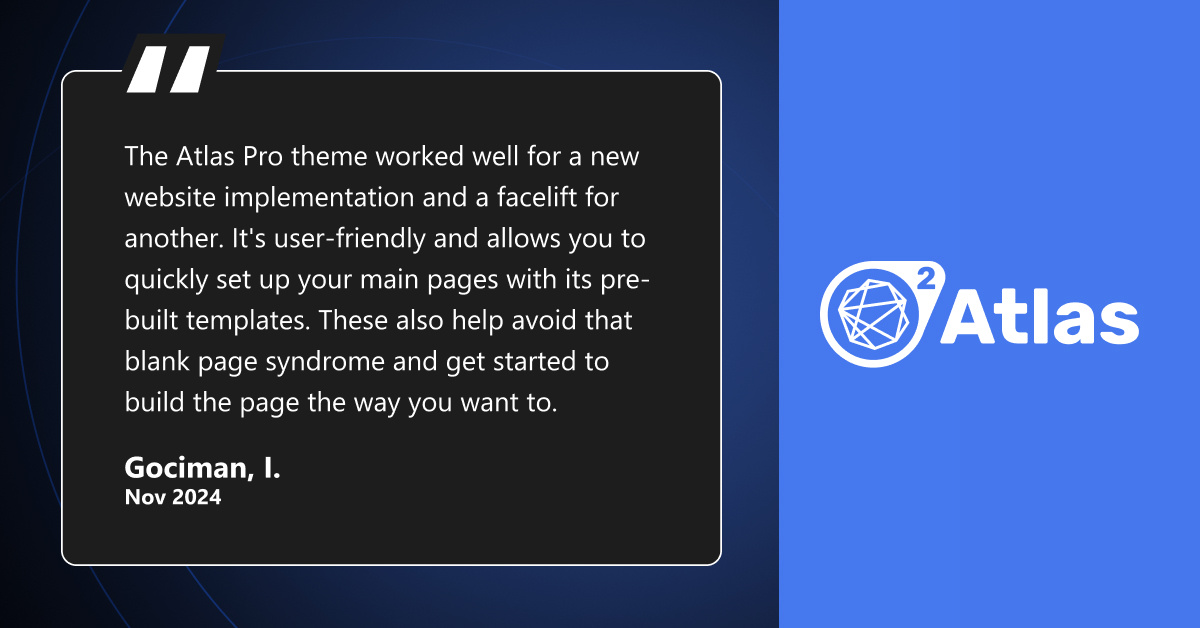
Because you aren't spending your budget on custom CSS, you can spend it on the thing that actually converts revenue: your story.
Instead of spending your budget on custom CSS, spend it on defining your ICP and nailing your Pain-Claim-Gain messaging on every page:
If your headlines are about your software rather than their problems, no amount of custom design will fix your conversion rates.
At Kalungi, we’ve built the marketing infrastructure that powers 150+ SaaS websites.
Whether you need a team to build it with you or for you, we start with the right foundation.
If you’d like support diagnosing your marketing infrastructure, or simply want an experienced perspective before you invest in a custom build-out, we're here to help.
Efficient website structure is crucial for enterprise SaaS sales. Learn how clarity and focused pages can accelerate deals and reduce friction in the...
Knowing when to retire content vs. producing new content can be a challenge. If you’re on the fence, use these tips to guide your website content...

Salesforce's best trading day ever wasn't proof AI spared SaaS. It's a test for what's core vs. replaceable in your own marketing stack. Suggested...