Many B2B SaaS marketing teams produce a steady stream of content, yet struggle to translate that activity into qualified pipeline. Blog posts are published, feature updates are announced, SEO pages are optimized, and still, revenue growth feels disconnected from output.
The issue is rarely a lack of content. More often, it is a sequencing problem.
SaaS content usually lives in the middle of the buyer journey. It explains how the product works, lists capabilities, and describes integrations. This “middle-out” approach assumes that buyers are already convinced a better solution exists and are simply evaluating options.
In reality, most prospects are not in active evaluation mode, they are operating within imperfect systems that feel tolerable enough to postpone change. To move them, content must follow the psychological progression that precedes purchase.
At Kalungi, we use the Wow, How, Now framework to ensure that every piece of content has a specific role in that progression.
Reference: BSMS 93 - The "Why" vs the "Wow, How, Now" frameworks in your GTM
Wow: Creating Tension Where Complacency Exists
The first barrier in B2B buying is not budget or procurement but inertia.
Organizations normalize inefficiencies, workarounds become routine, and reports are accepted as incomplete. When discomfort becomes familiar, urgency disappears.
Wow content exists to interrupt that normalization.
Its purpose is not theatrics or shock value but to reframe what the buyer believes about their current situation. In an environment increasingly saturated with AI-generated consensus, strong point of view becomes a competitive advantage. The companies that command attention are those willing to articulate why common industry practices are flawed, outdated, or misaligned with future risk.
This type of content often takes the form of an argument rather than a guide. It challenges prevailing assumptions, exposes hidden costs, and names risks that buyers have subconsciously accepted but never quantified.
When this type of content resonates, the immediate outcome is not a demo request. It is recognition. Prospects begin to question assumptions they previously treated as fixed. That shift in mentality creates the opening for deeper engagement.
Without it, even the most technically robust explanation of your solution will struggle to gain attention.
Distinguishing Buyer Stasis From Product Weakness
Executives frequently ask whether low engagement signals a product problem or a marketing problem. The answer often lies in how the market responds to Wow content.
If your argument resonates and sparks conversation, yet prospects do not immediately convert, the issue may not be your solution. It may simply reflect the natural progression from awareness to evaluation. Buyers need evidence before they act.
If, however, your perspective fails to generate recognition at all, the problem may be deeper. Either the pain is not urgent enough, or your articulation of it lacks specificity.
Wow content acts as a diagnostic tool. It reveals whether the market feels the tension you believe exists.
How: Proving Competence Before Asking for Commitment
Once buyers recognize that a problem deserves attention, a different concern emerges: whether your organization is capable of solving it.
This is where many teams misstep. After provoking awareness, they continue to emphasize opinion without demonstrating execution. The result is credibility fatigue.
How content bridges this gap by providing tangible utility. It translates perspective into process. Rather than simply asserting that a particular approach is flawed, it walks the buyer through how to evaluate their current state, how to calculate impact, or how to implement incremental improvements. The emphasis shifts from persuasion to assistance.
For complex or high-ACV solutions, the environment in which How content lives matters. Perspective-driven Wow pieces often perform best in social channels, executive briefings, or thought leadership forums where attention is scarce and framing matters. How content belongs in long-form assets, webinars, technical guides, and structured nurture sequences where depth builds confidence.
When buyers experience practical value before engaging sales, the conversation changes. Instead of starting from skepticism, it begins from informed curiosity.
Now: Converting Agreement Into Action
Even when buyers acknowledge a problem and trust your expertise, inertia can persist. Competing priorities and perceived switching costs create natural hesitation. Agreement alone does not generate action.
Now content addresses timing.
It connects the recognized problem and demonstrated solution to a specific and measurable outcome within a defined horizon. Case studies that quantify operational improvement, detailed implementation roadmaps that reduce perceived disruption, and data that highlights the cost of delay all serve to make the decision feel concrete rather than theoretical.
When Now follows Wow and How in a deliberate sequence, the call to action feels proportionate rather than premature. Buyers who have moved through awareness and evaluation do not experience urgency as pressure; they experience it as clarity.
Why Sequence Matters More Than Volume in B2B SaaS Content
Many SaaS teams produce substantial How content and limited Wow or Now material. The result is an educational library that never generates urgency.
Others focus heavily on Now content—case studies, testimonials, demo invitations — without first establishing relevance or credibility. That approach can generate short-term spikes but rarely builds authority.
Sequence is what turns content into system.
When Wow creates awareness, How builds trust, and Now clarifies timing, pipeline becomes a byproduct of structured narrative rather than isolated campaigns.
Addressing the Internal Friction Behind Content Sequencing
Adopting this framework often exposes internal resistance.
Sales teams frequently prioritize Now content because it appears closest to revenue. However, data consistently shows that prospects who engage with educational material prior to first contact move through the sales process more efficiently. Sequence reduces friction before the call ever begins.
Leadership teams sometimes worry about resource constraints, particularly when subject-matter expertise is concentrated in a small number of individuals. The solution is not to demand more writing from executives, but to extract structured insight through focused interviews. A single 20-minute discussion on recurring objections can generate substantial Wow and How material when shaped properly.
AI accelerates production, but it does not replace perspective. Original insight remains the scarce resource.
From Content Activity to Authority
When content follows a deliberate sequence, marketing shifts from publishing to positioning.
Rather than competing on volume or keyword density, your organization becomes known for a particular way of thinking. Prospects begin referencing your perspective before entering evaluation. Sales conversations start at a higher level of alignment.
This is how authority compounds. Not through frequency alone, but through coherence.
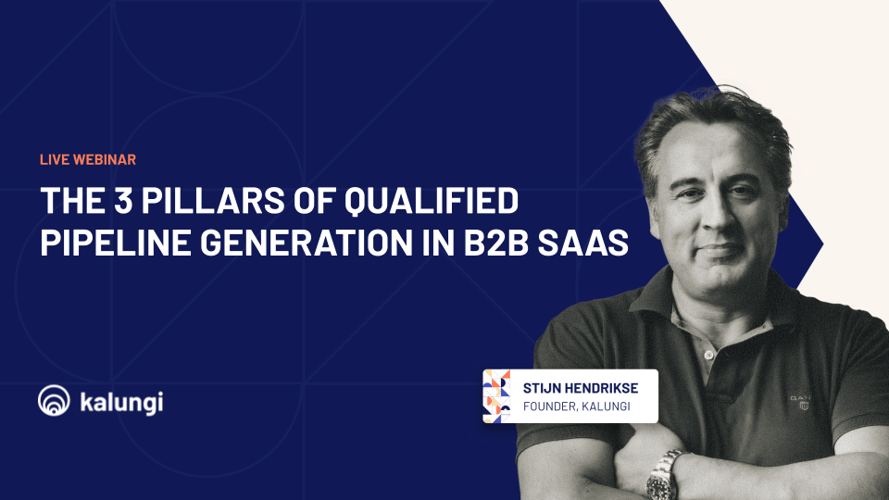
Webinar: The 3 Pillars of Qualified Pipeline Generation in B2B SaaS
If your content output feels high but pipeline growth remains inconsistent, watch the full masterclass where Kalungi Co-founder Stijn Hendrikse explains how the Wow, How, Now framework connects to demand creation and scalable growth.
The session explores how to structure content around buyer psychology, how to extract insight from internal experts, and how to align sales and marketing around a unified narrative.
Watch the recording here
Ready to Turn Content Into a Growth Engine?
If you want clarity on whether your content strategy is sequenced correctly—or whether you are over-indexed on the middle of the funnel—apply for a T2D3 Growth Workshop.
In this focused session, we will review your current content mix, evaluate its alignment with buyer progression, and outline a structured approach to building authority and qualified pipeline.
Apply for Your T2D3 Growth Workshop here