In B2B SaaS, marketing is often treated as a transaction. Budget goes out, pipeline is expected in return, and when attribution does not align neatly with spend, the conclusion is that something failed.
This mindset assumes that marketing is a vending machine. Insert dollars, receive leads.
The problem is that in competitive categories, channels mature quickly, messaging converges, and cost structures compress margins. Competitors can replicate product features and outbid you in paid acquisition faster than ever. If your only advantage is operational efficiency within crowded channels, your position is temporary by definition.
What compounds is learning.
The companies that scale most predictably do not treat marketing as a vending machine but as a structured mechanism for uncovering market truth. Pipeline is one output, but insight is the enduring asset. When insight compounds, allocation improves, positioning sharpens, and growth becomes less dependent on guessing.
Marketing Without Learning Always Decays
Marketing effectiveness erodes over time when the underlying assumptions remain unexamined. Teams repeat messaging that once worked, double down on channels that previously delivered, and interpret declining performance as a budget issue rather than a signal problem.
This is where entropy quietly sets in.
Preventing decay requires discipline in how campaigns are conceived. Instead of launching initiatives as isolated deliverables, each effort should begin with a clear and testable hypothesis. Which persona are you targeting? What specific pain are you surfacing? What behavior would validate that the pain is urgent enough to move budget?
When these assumptions are explicit, results become diagnostic rather than emotional.
If performance is weak, the team can analyze whether the issue lies in the clarity of execution or in the relevance of the pain itself. Without that clarity, every underperforming campaign feels ambiguous and reactive adjustments replace structured iteration.
Learning only compounds when it is intentional.
Separating Strategic Misalignment From Execution Weakness
A common leadership concern is whether failure reflects flawed strategy or simply poor creative execution. Without a framework, teams oscillate between blaming messaging and blaming market conditions.
The distinction becomes clearer when you evaluate where friction occurs in the funnel.
If visibility is high but engagement remains low, the message may not be compelling enough to interrupt attention. If engagement is strong but conversion stalls, the persona–pain match may lack urgency or budget authority. By examining where prospects disengage, you begin isolating the root cause rather than treating performance as a binary success or failure.
This diagnostic discipline prevents costly overcorrections. It reduces the likelihood of replacing partners prematurely or abandoning viable segments due to poor framing. Over time, it builds confidence in the decision-making process itself.
And that confidence is cumulative.
When an experiment fails, most organizations move on without extracting durable insight. Budgets are reallocated, creative is refreshed, and assumptions quietly shift without documentation. Months later, similar initiatives are launched under different language, often repeating the same mistakes.
Institutional equity emerges when insight is captured deliberately.
Some companies maintain a structured record of tested personas, surfaced pains, and the market’s response. This record does more than explain past outcomes; it informs future allocation. It clarifies which segments demonstrated urgency and which remained indifferent. It reveals where price sensitivity emerged and where friction was procedural rather than strategic.
Over time, this documentation reduces uncertainty in ways that dashboards alone cannot. The company begins operating with a refined map of where growth is most likely to compound.
That map is difficult to replicate externally because it is built from lived experimentation.
Closing the Loop Between Sales, Marketing, and Product
The richest feedback rarely lives inside campaign analytics. It surfaces in sales conversations, particularly in stalled or lost deals.
When objections are recorded systematically rather than informally, patterns begin to emerge:
- Prospects hesitate for consistent reasons
- Concerns repeat across segments
- Internal champions struggle to articulate value in specific ways
When those patterns are translated into messaging refinement, educational assets, or product adjustments, the organization moves from reactive selling to proactive alignment. Marketing content begins addressing real friction rather than hypothetical objections. Sales conversations accelerate because earlier touchpoints have already reduced uncertainty.
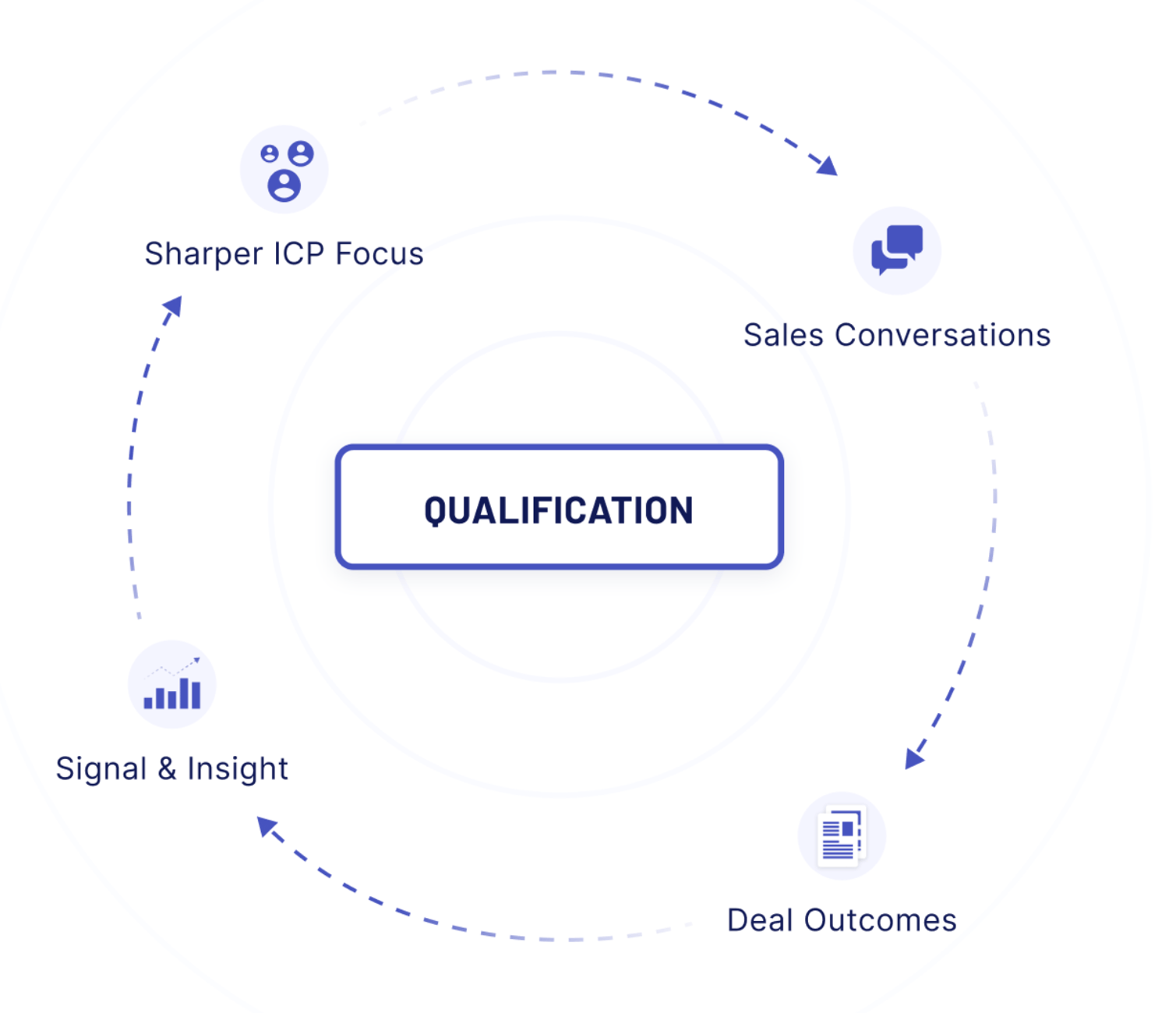
A feedback loop that spans marketing, sales, and product turns scattered interactions into coordinated insight.
The rise of AI has lowered the cost of producing content, but it has not increased the quality of market insight. Volume has become abundant; differentiation has not.
The real constraint is not output capacity but original thinking. The perspectives that resonate most strongly often reside with product leaders and founders who engage directly with customers. Extracting that knowledge through structured interviews allows marketing to translate lived experience into high-quality narrative and educational assets.
AI can assist with synthesis and formatting, but the signal must originate from human insight. In markets saturated with competent messaging, credibility emerges from specificity and depth.
Companies that treat AI as an amplifier of expertise rather than a replacement for it build more durable authority.
Why Learning Increases Velocity Rather Than Slowing It
Some leaders hesitate to formalize feedback systems because they associate analysis with delay. The concern is that experimentation frameworks will transform agile teams into bureaucratic research units.
In practice, disciplined learning accelerates execution.
When teams understand precisely why initiatives succeed or fail, they eliminate months of unproductive iteration. They stop spreading resources across low-signal segments and focus capital where urgency has been validated. Strategic debates shorten because decisions rest on accumulated evidence rather than intuition alone.
Velocity increases not because the organization moves faster in every direction, but because it stops moving in the wrong ones.
Over time, the rate at which a company learns becomes its defining competitive advantage. Competitors can replicate product features and adjust pricing, but they cannot access the internal knowledge generated through structured experimentation.
When feedback loops are embedded into the operating model, marketing ceases to be perceived as a cost center. It becomes the mechanism through which the company understands its market with increasing precision.
Webinar: The 3 Pillars of Qualified Pipeline Generation in B2B SaaS
If your marketing currently feels disconnected from sales insight or product direction, this full masterclass provides a detailed walkthrough of how to build feedback loops that convert campaigns into institutional knowledge.
Kalungi Co-founder Stijn Hendrikse explains how to distinguish strategic misalignment from execution issues, how to capture real signal from sales interactions, and how to turn learning into a scalable growth engine.
Watch the recording here

Ready to Evaluate Your Feedback System?
If you want clarity on whether your current go-to-market motion generates learning or simply activity, apply for a T2D3 Growth Workshop.
In this session, we will examine your funnel, identify where signal is being lost, and outline a structured approach to converting market insight into predictable growth.
Apply for Your T2D3 Growth Workshop here