
Customer Story · Fraxion
How Fraxion Broke Into the U.S. Mid-Market and Doubled Contract Values
$3.2M in new-customer revenue, $12.3M in marketing influenced revenue, and a partnership that held for seven years.

- Engagement
- Full-service B2B SaaS marketing function, delivered as a service
- Duration
- 2019 – 2026 · seven years, renewed
- Scope
- Strategy · Web · Content & SEO · Paid media · RevOps · ABM
What Stanton had to say
Don't just take our word for it
“A seven-year relationship is probably as long as we spend with our customers. To be that sticky means you're doing a great job.”
 Stanton Jandrell
CEO and Founder, Fraxion
Stanton Jandrell
CEO and Founder, Fraxion
01 · The company
Procure-to-pay software, born in Cape Town, bound for the U.S.
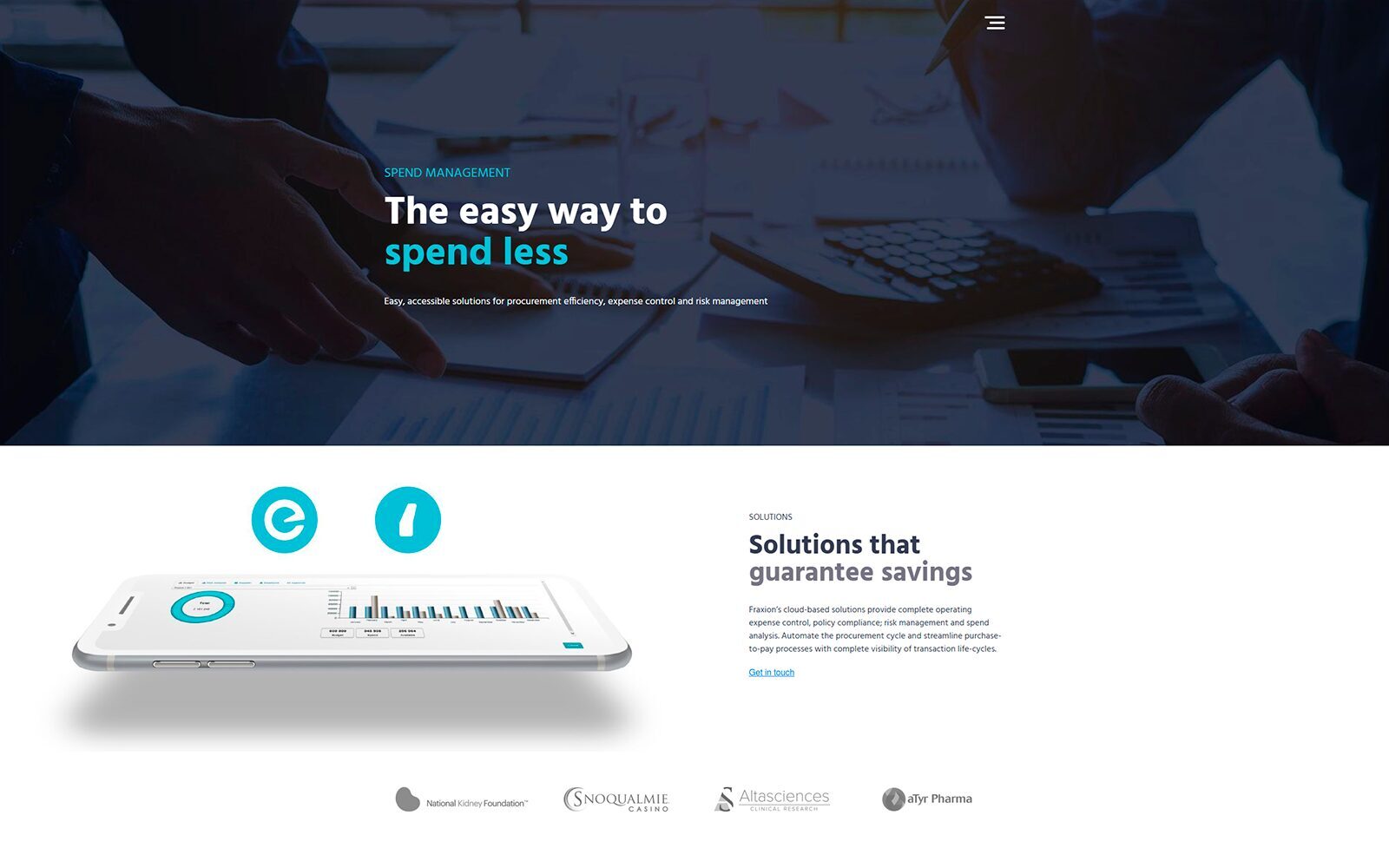
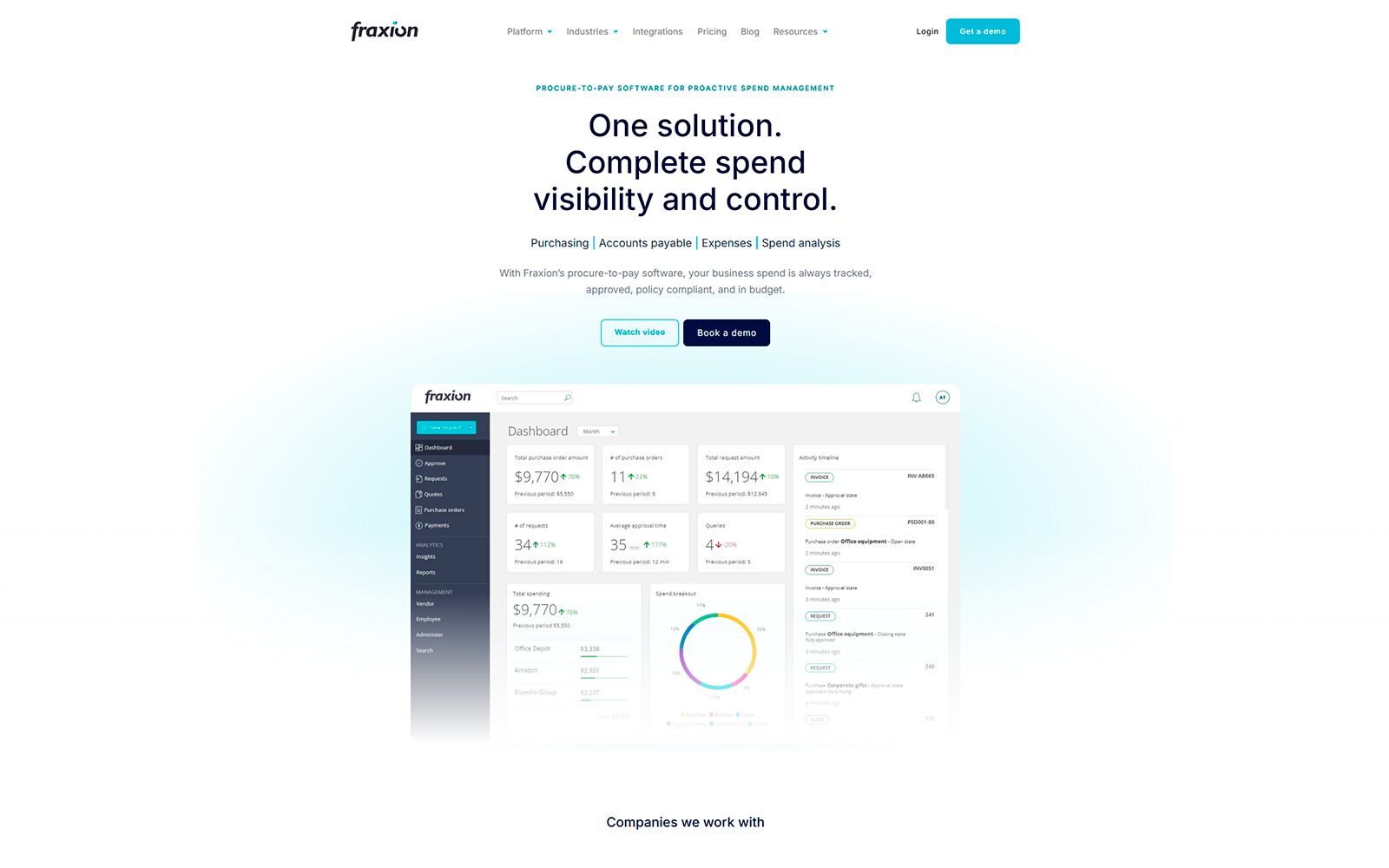
Fraxion gives mid-market finance teams control of spend before it happens: purchase requisitions, approvals, and AP automation in one platform. By 2019 it had a proven product and a U.S. foothold through an acquisition. What it lacked was a map of the U.S. buyer, a scalable demand engine (the website drew 17,870 visits that year), and any appetite for a large in-house marketing team.
“We were a South African company that had established a very small footprint and acquired a new organization here. But it meant that we didn't have deep insights into what the local U.S. market required. … The ability to keep good-quality messaging, good-quality marketing artifacts to help support our sales team has been vital.”
02 · The challenge
Enter a new market without building a marketing department
Entering the U.S. mid-market meant competing with established players for buyers Fraxion's team didn't yet know: new personas, new language, new channels. The classic answer is to hire a marketing leader, content writers, an SEO specialist, paid media managers, designers, and operations. For a lean company, that's slow, expensive, and risky.
Fraxion chose a different route: one partner, carrying the full function, able to scale up or down as the business demanded.
Full-service marketing“We could have done that internally, but we would have had to hire a fairly significant team. Our decision was to keep it lean, to utilize a service that could scale appropriately. The fact that we've had a seven-year relationship means it has worked for us.”
 Stanton Jandrell — CEO and Founder, Fraxion
Fraxion's marketing lead, Cheryl Haywood, reached the same verdict from inside the work:
“I think it would have taken so much longer to upskill an internal team… It would have taken a lot longer to reach our objectives without Kalungi.”
 Cheryl Haywood — VP of Marketing, Fraxion
In their words
What Fraxion's leaders had to say
 Stanton Jandrell
CEO and Founder, Fraxion
Stanton Jandrell
CEO and Founder, Fraxion
“The ability to draw on a wide range of resources. We were thrilled with the number of leads and opportunities we got.”
- $12K
- Avg. contract value, then
- $26K
- Avg. contract value, now
 Cheryl Haywood
VP of Marketing, Fraxion
Cheryl Haywood
VP of Marketing, Fraxion
“The Kalungi team has always been like my team… it's been very consistent in terms of reliability… I've never ever felt like I couldn't rely on the team or that they were going to let me down.”
05 · Why it worked
Five reasons the model held for seven years
-
Leverage without headcount.
A lean company got a complete marketing function without building one: senior strategy and hands-on execution from one team, scaled to the moment.
-
Strategy first.
Positioning and ICP came before campaigns; every channel then pulled in the same direction for seven years.
-
A model built to adapt.
From the first website sprint to RevOps and ABM years later, the engagement flexed as Fraxion's needs changed. That is the “menu of available capabilities” the CEO valued.
-
Honest measurement.
Budget moved to what could prove revenue, and away from what couldn't. The reporting that told Fraxion the truth is the same reporting behind every number on this page.
-
Stickiness as proof.
In the CEO's own benchmark, a six-to-seven-year vendor relationship is as long as Fraxion keeps its customers. This one kept earning its renewal.
“What I really love about working with Kalungi is just the continuous innovation and always coming up with something new… after so many years… it's never been stagnant… I'm actually quite amazed at the rate of improvement.”
Cheryl Haywood
VP of Marketing, Fraxion